
THE STORY OF FORZA™
The story behind the creation of a revolutionary anti-aging supplement.
- 1987Osmotin discovered
- 1995Adiponectin discovered
- 2004Osmotin research gift to Purdue
- 20139th Dimension Biotech founded
- 2016FDA bioencapsulation recommendation
- 2026Phase II trial complete
 Trial protocol, peer reviewed and published 2025WATCH THE SEMINARS
A turning point in human health and aging.
FORZA™ has completed a phase 2 clinical trial on Progressive Multiple Sclerosis in partnership with the Italian National Multiple Sclerosis Foundation and the General Hospital of San Martino, in Genoa, Italy. Results will be presented at the NIC Conference in Rome, Italy.
Exploratory Trial of Forza™, a Novel Nutraceutical From Actinidia Deliciosa Plants Bioengineered to Bio-encapsulate the Osmotin Plant Protein as Adjuvant for the Treatment of Progressive Multiple Sclerosis
FORZA™ ON CLINICALTRIALS.GOVFROM DISCOVERY TO TRIAL
THE DISCOVERY OF OSMOTIN
The Osmotin plant protein was discovered in 1987, and it has since been universally recognized for the important protective role it plays in plants' response to environmental stresses. It was also established, however, that, although Osmotin is present in all plants, it is only found in minimal amounts.
Following this discovery, laboratories in universities around the world launched various research projects to better understand and harness Osmotin's potential in plants.
OUR OSMOTIN-RICH SUPERPLANTS
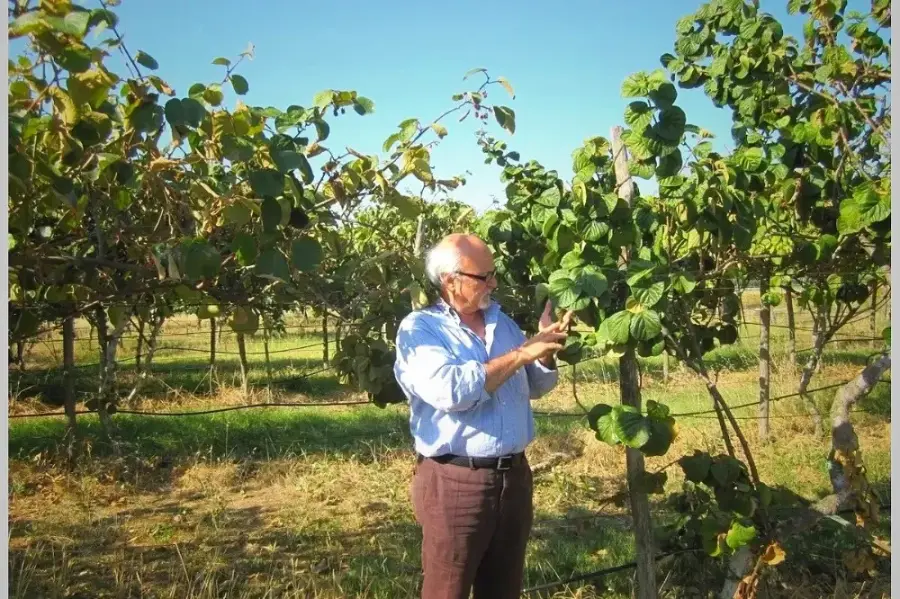
One such lab in a leading agricultural Italian University focused on the daunting task of bioengineering Osmotin-rich olive trees and kiwi vines, as these plant varieties are among Italy's principal exports, with major economic, environmental, and cultural values. The research effort was led by our Chief Biotechnology Advisor Prof. Eddo Rugini, Ph.D. and our CEO Dr. Bruno Ruggiero, PhD.
Not only was the Italian team successful in the lab, but following about 10 years of R&D, the now Osmotin overexpressing super plants were also successfully field-tested for another 10 years, confirming their ability to thrive under drought-stress, cold stress, fungal attacks and overall having superior agronomic qualities compared to common kiwi and olive varieties.
THE DISCOVERY OF ADIPONECTIN
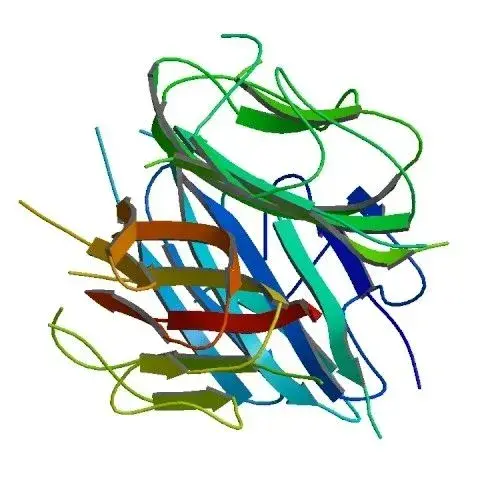
Meanwhile, in 1995, in a seemingly unrelated event, the human hormone Adiponectin was discovered in the adipose tissue, which gives it its name. It quickly became clear that Adiponectin could be an excellent anti-diabetes therapeutic candidate. However, as time went by, no practical way of using Adiponectin therapeutically was identified. Efforts to create a synthetic version of Adiponectin failed as well.
OSMOTIN & ADIPONECTIN: THE CONNECTION
In the late 1990s, following his success with the development of the Osmotin-rich olive and kiwi plants in Italy, our CEO Dr. Bruno Ruggiero, Ph.D. was invited to continue his work on Osmotin by joining a US-based team of plant biotech researchers at Purdue University, one of the world's leading agricultural universities.
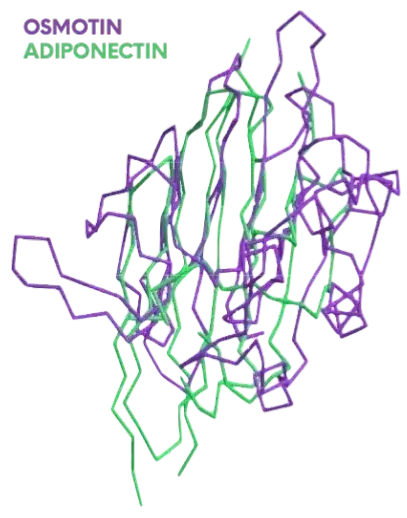
At the start of the new millennium, the US-based team set to work, and they soon noted a remarkable similarity between the newly published 3D structure of Adiponectin and that of the plant protein Osmotin. If they were right, this overlapping of structures meant that Osmotin would mimic Adiponectin's therapeutic activity and, as it was sourced from plants, theoretically, Osmotin could become a tangible and powerful anti-diabetes therapeutic candidate.
The initial laboratory work in animal diabetes models confirmed this expectation and an entirely new horizon of opportunities became open to exploration.
DR. RUGGIERO GIFTS $1 MILLION TO UNIVERSITY FOR R&D
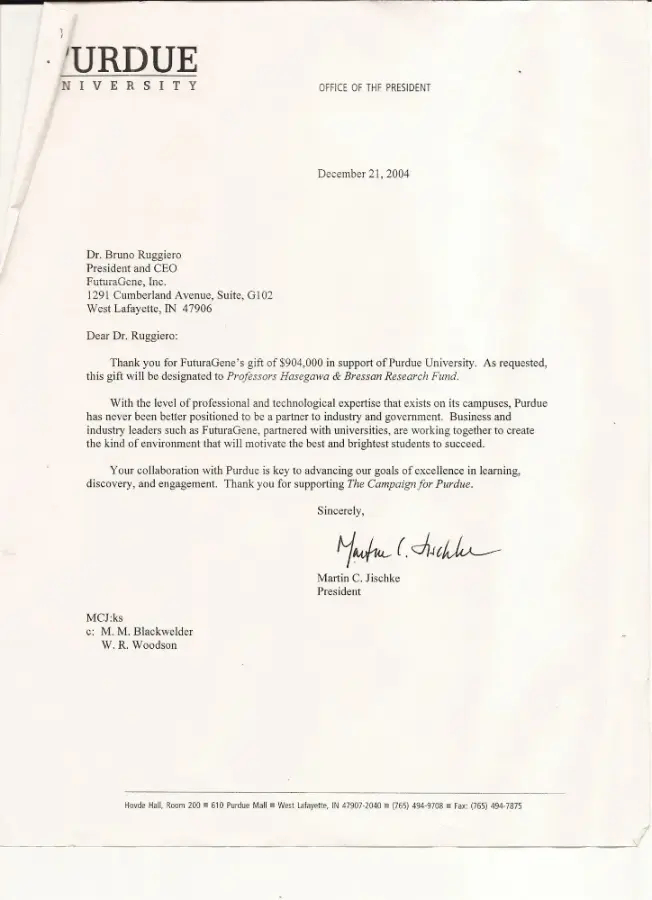
SUPPORTING OSMOTIN RESEARCH & DEVELOPMENTIn 2004 Dr. Bruno Ruggiero provides a $1 million USD gift to Purdue University to promote research on Osmotin's human health applications.
US EMBASSY MAKES MAJOR ANNOUNCEMENT
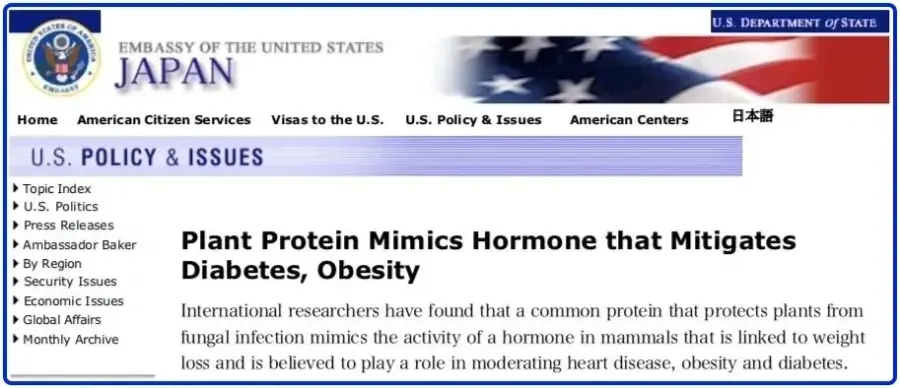
US EMBASSY ANNOUNCES OSMOTIN DISCOVERYIn January 2005, the US Embassy in Japan made an official announcement celebrating this discovery and praising its significance in the fight against diabetes, obesity, and heart disease.
A NEW DIMENSION
With this in mind, in 2013 Dr. Ruggiero co-founds 9th Dimension Biotech, Inc. with the goal of bringing a life-time of experience in biotech and the best technology in the field to the market with a strategic and solution-oriented approach.
As an established leading expert on both Adiponectin and Osmotin in 2016 Dr. Ruggiero was honored to receive a US Einstein visa for his work in this field. Dr. Ruggiero's guidance has allowed the Company to develop our FORZA™ supplement from the university laboratories through a completed phase 2 clinical trial in partnership with leading European Hospitals and the Italian National Foundation for Multiple Sclerosis. Results will be presented at the NIC Conference in Rome, Italy, in October 2026.
Under his leadership, 9th Dimension Biotech has developed a powerful interdisciplinary network of relationships and collaborations with the world's leading scientists and best research institutions in pursuit of the mission to identify and develop the most promising technologies to offer quality solutions to the world's most difficult problems.
FDA BIOENCAPSULATION RECOMMENDATION
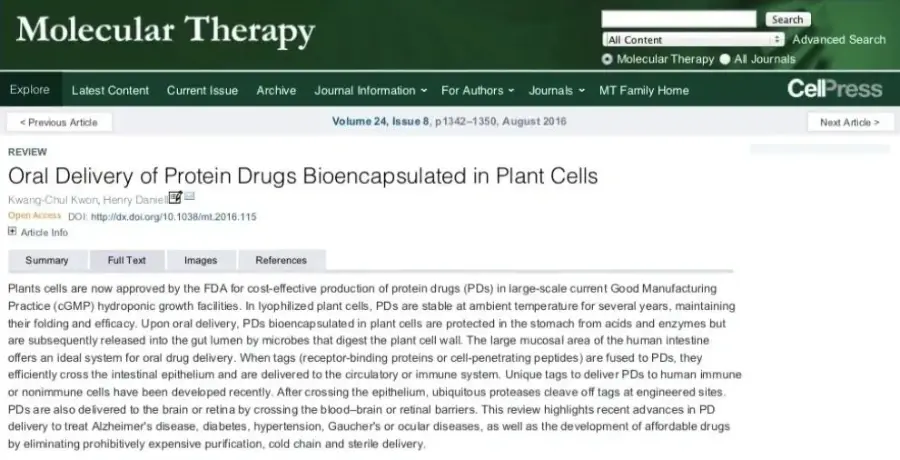
The Food and Drug Administration (FDA) has identified our method of protein production as the absolute best due to the plant cells' ability to protect the proteins from being broken down in the digestive tract and only releasing them in the gut for a more powerful and beneficial therapeutic effect.
THE IDEAL SOLUTION
In the nearly three decades of research performed since Adiponectin's discovery, the understanding of its role has far surpassed its initial qualification as an anti-diabetic. Indeed, its receptors are now known to be expressed in all 11 organ systems of the human body and Adiponectin is now seen as a key life-span and health-span regulator.
Our Osmotin-rich kiwi and olive plants take on a new importance as they represent the ideal source of Osmotin.
INDEPENDENT R&DVisit a selection of nearly 30 years of global, independent scientific research describing the function of Osmotin and Adiponectin.
THE SOURCE OF FORZA™
Learn more about our Osmotin-rich super plants and view our scientific publications describing their function and enormous potential.
OUR SCIENTIFIC DATA
Our superkiwis over-express the powerful plant protein Osmotin and are the source of our revolutionary product FORZA.
Our super plants boast over 20 years of R&D and 10 years of field trials performed by our partner University in Italy.
FORZA™ PRODUCTION
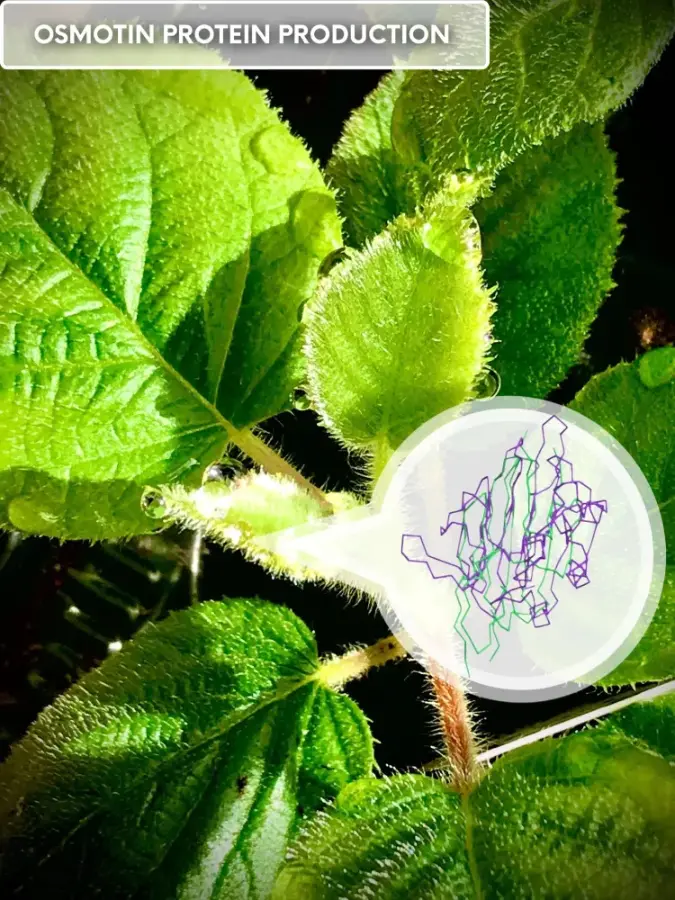
Every cell in our plants produces large amounts of Osmotin making them the perfect source for FORZA™.

We harvest the leaves of our Osmotin-rich SUPERKIWI™ plants.

The leaves are dried to remove excess water and concentrate the Osmotin protein.
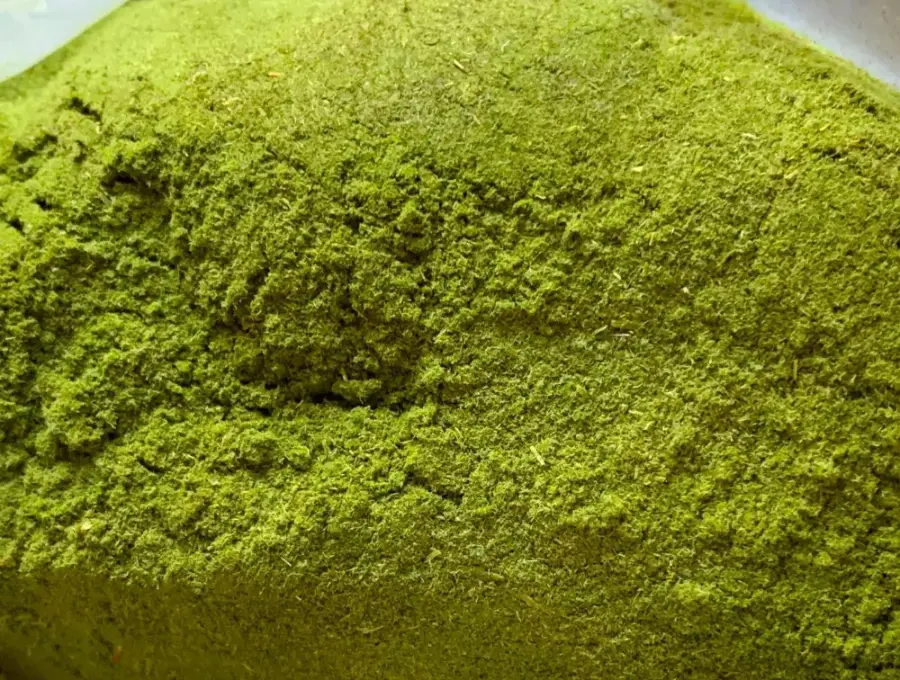
The dried leaves are ground to a fine, Osmotin-rich powder.
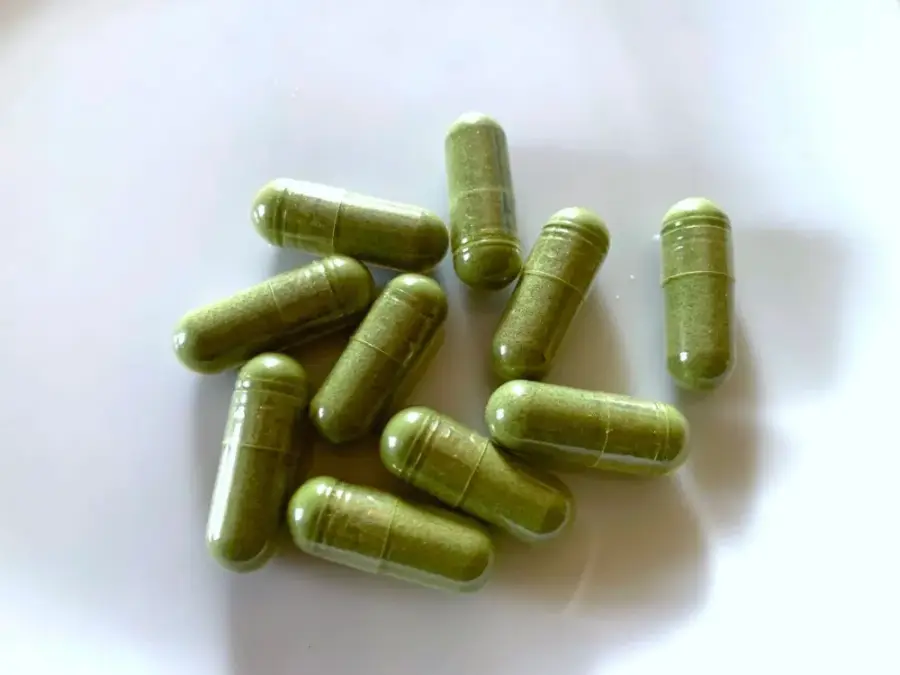
The powder is encapsulated in industry standard plant-derived gelatine capsules.
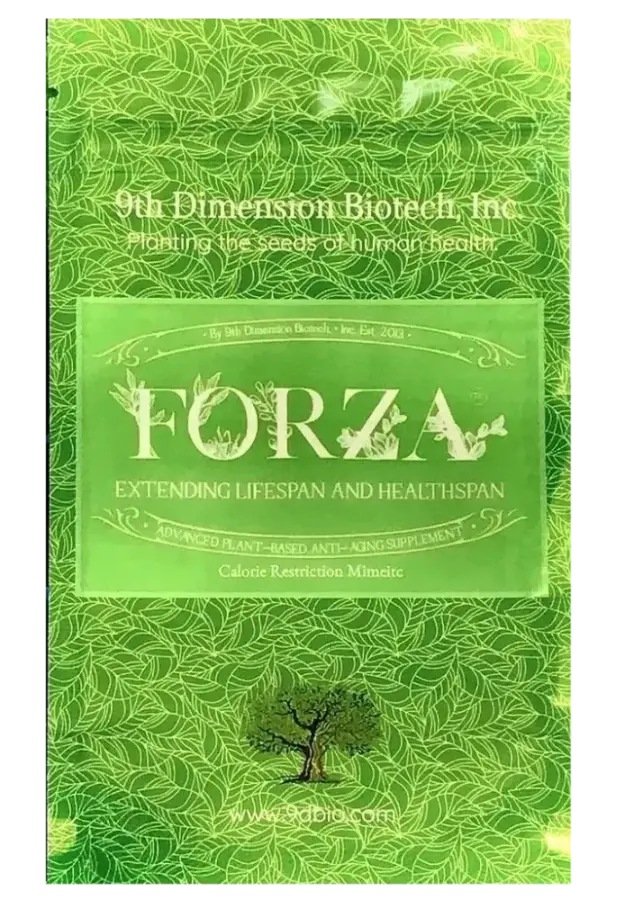
FORZA™ is ready, packaged and shipped.
ICBE 2018 PROCEEDING BOOK
Transformation of kiwi (Actinidia deliciosa A. Chev.) and olive (Olea europaea L.) with tobacco osmotin gene confers drought-stress tolerance and provides a health-promoting protein source. «The creation of improved plants suitable for adverse abiotic and biotic conditions and the opportunity to also use their leaves and fruits as a source of the health-promoting osmotin protein both provide amazing perspectives for future research in human health and agricultural biotechnology.»
READ THE PUBLICATION
ACTA PHYSIOLOGIAE PLANTARUM, OCT. 2017
Olive (Olea europaea L.) plants transgenic for tobacco osmotin gene are less sensitive to in vitro-induced drought stress
«The transgenic line Canino AT17-1 was more efficient in the activation of defense responses against oxidative stress with respect to the Canino wt.»
READ THE PUBLICATION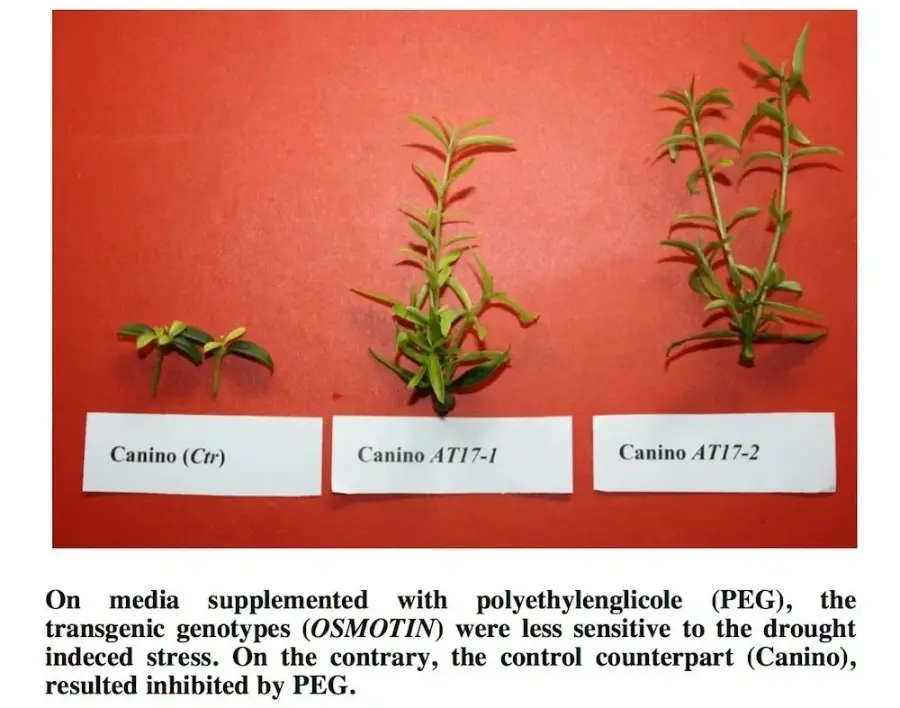
KIWINFORMA, OCT. 2016
[ITA] Strategie per migliorare la tolleranza allo stress idrico dell'Actinidia (Actinidia Deliciosa A. Chev.) e ricerca di marker biochimici per la selezione precoce.
«Questi genotipi sono di fatto dei perfetti bioreattori in grado di fornire l'osmotina, di grande valore terapeutico, in buone quantità e in un contesto già pronto per il consumo umano e animale, rendendo una possibile commercializzazione di questa sostanza economicamente vantaggiosa per l’industria farmaceutica oltre che per i fornitori delle piante.»
[ENG] Strategies for the improvement of water stress tolerance of actinidia (Actinidia Deliciosa A. Chev) and biochemical marker research for early selection.
«These genotypes are, de facto, perfect bioreactors capable of supplying osmotin, of great therapeutic worth, in good quantities and in a context of being ready for human and animal consumption, making the commercialisation of this substance economically advantageous for the pharmaceutical industry and plant suppliers alike.»
READ THE PUBLICATION
VII INTERNATIONAL SYMPOSIUM ON KIWIFRUIT, 2011
Kiwifruit Transgenics for Osmotin Gene and Inoculation Tests with Botrytis cinerea and Cadophora luteo-Olivacea «In particular the transgenic clones 120 and 122 fruits retained higher quality in shelf-life than those harvested from control plants, demonstrating a good resistance to post-harvest damage after a long period of storage.»
READ THE PUBLICATION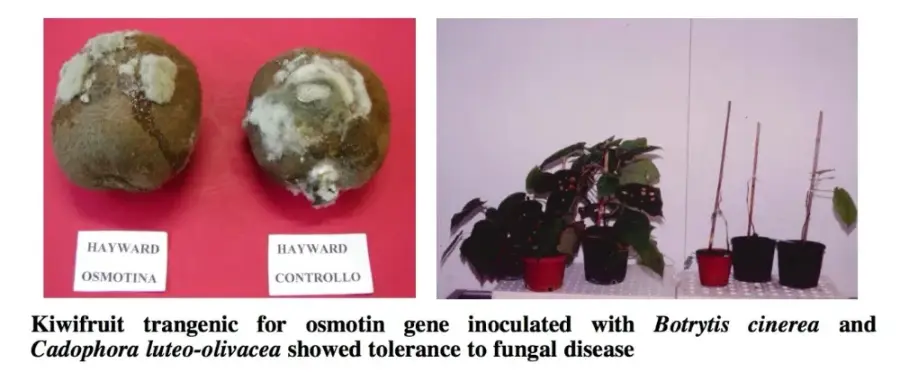
DOWNLOAD OUR PUBLICATIONS
PLANNING A HEALTHY LIFESTYLE
Understanding where FORZA™ might fit in a plan to protect you.
There are few - if any - contemporary subjects more fraught with confusion, anxiety, misunderstanding and frustration than our general health, our health practices and our healthcare systems. A big part of our problem is the lack of a shared fundamental perspective on how and why the diseases of aging have such a punitive footprint, despite (or perhaps because of?) modern societies showing significant augmenting of human longevity – 30 to 40 years past what our ancient hunter gatherer ancestors had in terms of expected average lifespan.

HARNESSING THE FULL POWER OF NATURE
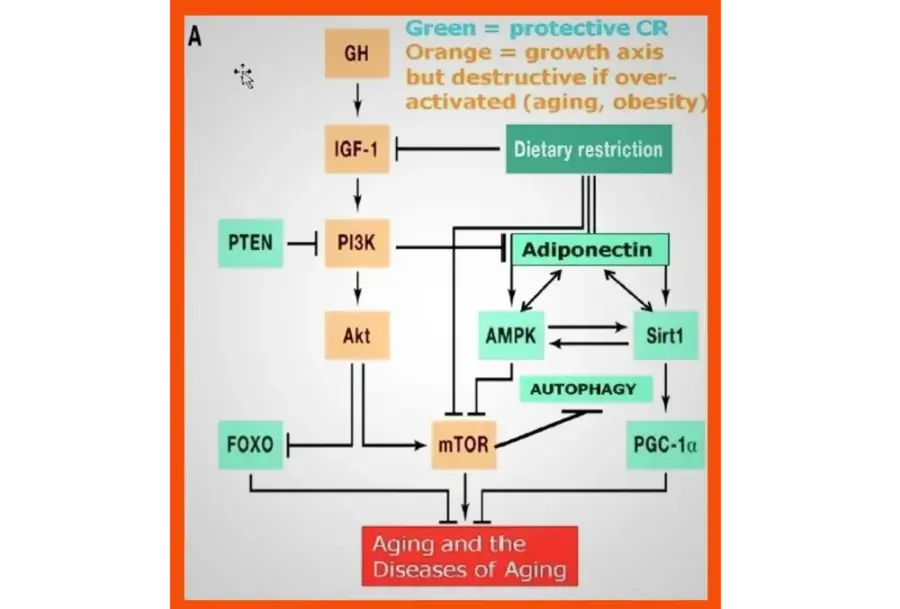
FORZA™ is a rich source of a powerful plant-derived, stress-modulating protein called ‘osmotin,’ which acts like Adiponectin (a human hormone normally produced by fat cells but declining both in aging and in obesity) at two separate Adiponectin receptor systems (APNR1 & APNR2), where it functions to promote protective effects within the Calorie Restriction network.
The following graphic shows a subset of critical signaling partners that regulate the transition between anabolic (high resource states) in orange and catabolic (low resource states) in green. These are very ancient.
FORZA™ - THE ADVANTAGE
Other calorie restriction mimetics including famously resveratrol/pterostilbene, rapamycin, and metformin, all have significant downsides, not shared with FORZA™/osmotin, which include rapid excretion/metabolism (resveratrol and to a lesser extent pterostilbene along with many other polyphenols), promotion of insulin resistance and diabetic physiology (paradoxically from rapamycin’s initially under-appreciated impact on mTOR complex 2, which regulates insulin signaling/sensitivity), and dose-dependent GI toxicities (Metformin).
This makes FORZA™ uniquely appealing as a nonprescription alternative CR mimetic, but without the GI side effects associated with metformin, and without the too-rapid clearance of many polyphenols which limits their activation of the calorie restriction physiology network. We believe this makes Forza special, and currently without a real competitor.
THE AGING PROBLEM
AN EVOLUTIONARY DISCORDANCEEvidence suggests that the critical drivers for all the common diseases of aging rest in a widespread and fundamental gene-environment mismatch – what has been called an ‘evolutionary discordance’ between lifestyles and genes.
For ~190,000 of our roughly 200,000 years on Planet Earth, we have lived a fundamentally hunter-gatherer lifestyle – extremely physically active with lots of aerobic exercise (due to having to chase our dinner often for miles!), living mostly outdoors, while we were virtually never socially isolated due to our tribal participation in hunting and gathering, consuming a varied but Paleolithic diet, while sleeping soundly (in part due to all that exercise!).
In contrast, modern technological societies show widespread social isolation, with online social media substituting for in-person tribal and family intimacies, while living in a mostly sedentary lifestyle, consuming pro-inflammatory diet patterns heavy in grains, milk products and refined sugars, while shorting fruits and vegetables, consuming antibiotic-tainted protein sources, and suffering variable levels of basic sleep deprivation.
Piecemeal, we have discovered through much empirical work in the health sciences that returning our lifestyles to these ancient patterns is across-the-board protective, and realigning all of these ways of living indeed is likely to be profoundly protective. Rectification of these multiaxial and unhealthy lifestyle practices becomes, therefore, the most important healthcare intervention one can make – re-aligning one's lifestyle as much as possible with these ancient practices that cut across diet, exercise, sleep and social belonging. In this sense, and in pointed contrast to the messaging of the medical industrial complex, long term health is NOT about high technology interventions, but about a primary prevention, originating in how we live.
HEALTHSPAN AND CALORIE RESTRICTION
THE CONNECTIONA second option for long term protection of health, and one which complements this first and essential task of lifestyle change, relates to what we have discovered about calorie restriction and its protective effects – and calorie restriction physiology also has very ancient foundations, predating not just the evolution of mammals but even vertebrates.
Calorie or dietary restriction – CR/DR – (not to be conflated with starvation as this is destructive) constitutes a scientifically validated gold standard for the long-term preservation of health, with protective effects confirmed in both shorter-lived model organisms (in which aging is studied scientifically, such as yeast, fruitflies, and roundworms) but also in mammals, primates and humans. However, it is not a viable healthcare strategy for most people, due to the difficulties associated with coping with chronic hunger and resisting available (and often tasty!) foods. Few individuals are able to adhere to a CR regimen – probably under 2% of the population. However, intermittent fasting gives many of the benefits of calorie restriction, while requiring less willpower (and it shifts our physiology towards CR after just 15-18 hours of fasting).
THE ROLE OF CR MIMETICS
A third complementary option is the use of what are called ‘CR mimetics’ – these are various substances, typically plant compounds or their derivatives, that generate at least some of the protective physiology of calorie restriction but without the pain and stress of chronic hunger.
FORZA™ is uniquely appealing as a nonprescription alternative CR mimetic. It is a rich source of the powerful plant-derived, stress-modulating protein called ‘osmotin,’ which acts like the key human hormone Adiponectin and thus functions to promote protective effects within the Calorie Restriction network.
We believe that armed with this basic knowledge, self-aware consumers can make better informed choices about protecting their longterm health.
Clinical Neuroscience Advisor, Project FORZA, 9th Dimension Biotech
ACTIVATING THE CALORIE RESTRICTION NETWORK
Adiponectin and Osmotin play a key role in the Calorie Restriction network with anti-aging and protective effects.
THE CR PATHWAY
The human hormone Adiponectin is the key modulator of the Calorie Restriction (CR) pathway and its plant counterpart Osmotin is capable of activating it as well.
With its high content of Osmotin, FORZA™, greatly facilitates the pursuit of a healthier lifestyle and becomes the ideal CR mimetic.
CALORIE RESTRICTION MIMETICS AND THEIR BENEFITS
Delimit penetration of, delay onset of, and in some instances, regress diseases of aging. Anecdotal clinical information suggests that such regression of neurodegenerative disorders is possible, particularly if caught early.
Seriously reduce underlying cellular and molecular risk factors for the disease of aging, such as disinhibited innate immunity, increasing insulin resistance, DNA damage, mitochondrial dysfunction, and other phenotypes of aging, as discussed in our special Seminar Series.
Reduce some aging phenotypes such as sarcopenia, insulin resistance, and again improve some biomarkers that index either aging and/or its diseases.
Find a new balance between lifespan and healthspan.
THE FORZA™ PLAN
Our Clinical Neuroscience Advisor Dr. Douglas Watt, Ph.D. discusses the abrupt lifestyle and dietary changes taking place in our modern society; the connection between healthspan and calorie restriction; and FORZA™'s advantage over other calorie restriction mimetics in the building of a long-term health plan.
VIRTUAL LIBRARY
A selection of relevant scientific publications.
INDEPENDENT R&D
This page offers a comprehensive selection of relevant scientific, peer-reviewed publications describing the function of the key human hormone Adiponectin and that of its plant counterpart - the powerful protein Osmotin.
ADIPONECTIN - THE KEY LIFESPAN REGULATOR
Follow the links below to read key international published research on Adiponectin - the key life-span regulator - and its receptors:
THE OSMOTIN-ADIPONECTIN CONNECTION
OSMOTIN AS A PLANT THERAPEUTIC PROTEINClick on the links below to learn about Osmotin's therapeutic activity:
THE ADIPONECTIN & OSMOTIN COLLECTION
36 DOCUMENTSADIPONECTIN AS A CR MIMETIC
This page offers a comprehensive selection of relevant scientific, peer-reviewed publications describing the function of the key human hormone Adiponectin as a Calorie Restriction Mimetic.
90 DOCUMENTSPlanting the seeds of human health
PARTNER WITH US